
TL;DR:
Oil prices in 2026 have become one of the biggest wildcards facing the global economy. They dropped nearly 6% on May 25, 2026 after Trump described US-Iran talks as “constructive.” One positive statement, however, is not the same as a signed agreement. The Strait of Hormuz handles roughly 25% of the world’s seaborne oil trade, and with shipments having fallen to less than 10% of pre-war levels at their lowest point, the supply disruption is real and material. Businesses across logistics, manufacturing, and agriculture are already managing higher freight costs, rising insurance premiums, and disrupted supply chains. This report examines what the data actually shows, what forces are pulling in both directions, and what practical options exist for businesses and investors navigating this environment.
What Is Driving Oil Prices in 2026
Oil prices in 2026 have witnessed one of the most dramatic swings in recent history. On May 25, 2026, Brent crude fell nearly 6% after President Trump described US-Iran negotiations as progressing “in an orderly, constructive manner” (CNBC, 24 May 2026, Oil prices fall after Trump says Iran talks constructive). That was welcome news for energy markets that have been under significant pressure since February. One positive diplomatic statement, however, is not the same as a signed agreement, and the underlying disruption has not yet been resolved.
Since the US-Israel coalition launched strikes on Iranian energy infrastructure on 28 February 2026, Brent crude rose more than 50%, from around $69 per barrel at the start of the year to a peak well above $100 (World Bank, 28 April 2026, Commodity Markets Outlook). The World Bank’s Commodity Markets Outlook (April 2026), published under Chief Economist Indermit Gill, describes the disruption as having “triggered the largest oil supply shock on record, with an initial reduction in global oil supply of about 10 million barrels per day.” This is the World Bank’s own characterisation. Readers wishing to assess that claim against historical episodes — including the 1973 oil embargo and the 1979 Iranian Revolution — are encouraged to consult the full report at worldbank.org. Energy prices overall are projected to rise 24% across 2026, the highest annual increase since Russia’s invasion of Ukraine in 2022 (World Bank, 28 April 2026). Brent is forecast to average $86 per barrel for the full year, up from $69 in 2025, with a severe-disruption scenario reaching $115 per barrel.
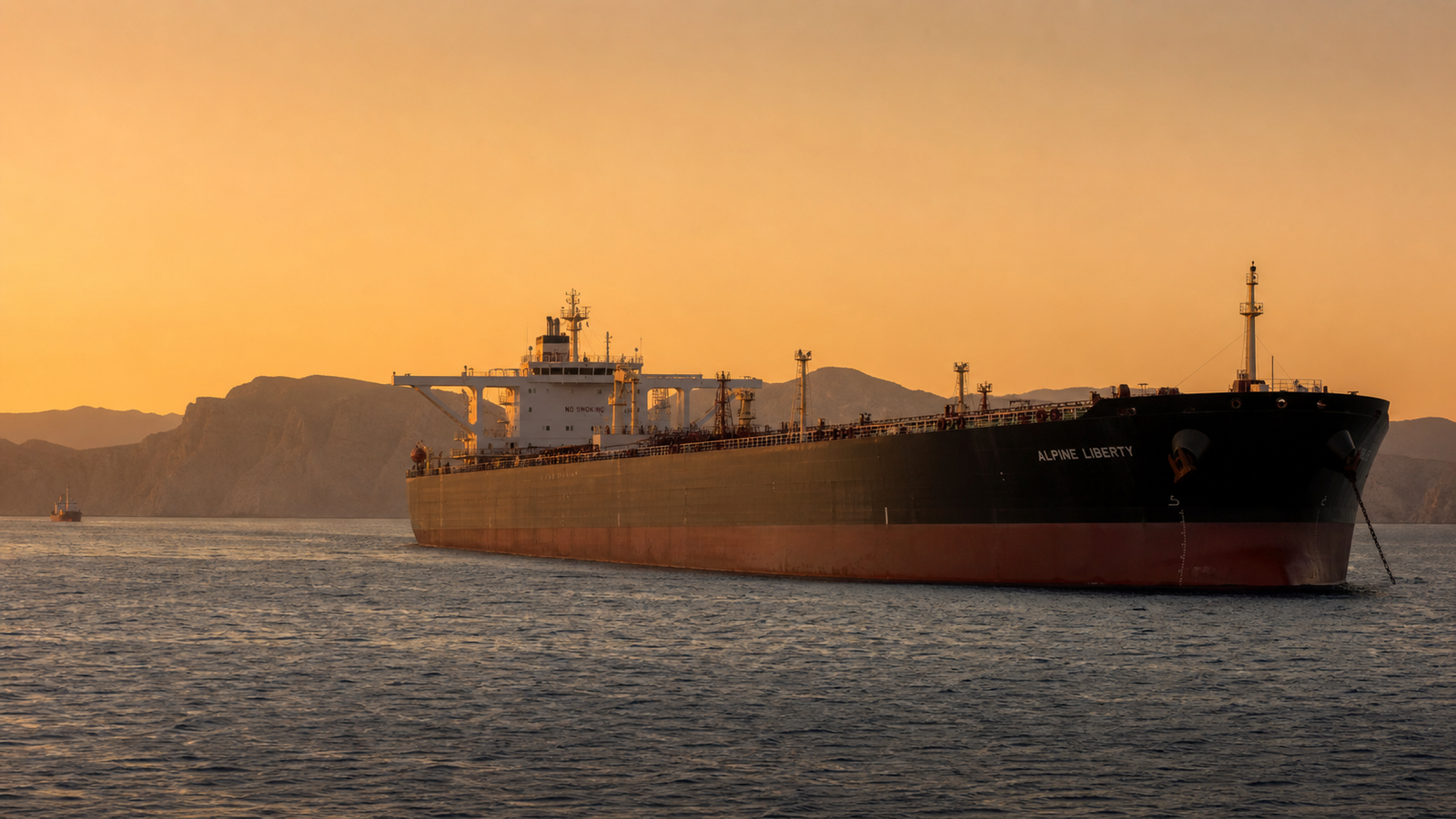
The geography of this crisis matters. According to the World Economic Forum, citing International Energy Agency (IEA) data, approximately 20 million barrels per day of crude oil and petroleum products passed through the Strait of Hormuz in 2025, accounting for around 25% of the world’s seaborne oil trade and 34% of global crude oil trade specifically (WEF, 16 March 2026, Where in the world does our oil come from?). Oxford Economics estimates the total daily transit value, including Iranian exports, at over $1.3 billion (Oxford Economics, 27 February 2026, Iran and the Strait of Hormuz: Risks to Global Energy Prices).
Why Oil Prices 2026 Remain Uncertain
Markets reacted positively on May 25, but the structural uncertainty has not been resolved. Earlier in May, when Trump rejected Iran’s response to a US peace proposal, Brent spiked intraday to $105.50 per barrel within hours (The Guardian, 11 May 2026, Oil prices climb after Trump dismisses Iran’s response to peace plan). The Wall Street Journal reported that ING’s Commodities Strategy team identified Persian Gulf supply risk as the dominant driver of energy markets in 2026 (Wall Street Journal, 10 May 2026, Oil Gains As Trump Rejects Iran’s Response to U.S. Plan).
The IEA’s Oil Market Report (13 May 2026) projects that, assuming flows through the Strait gradually resume from June, global oil supply will still decline by an average of 3.9 million barrels per day across the full year. Oil shipments through the Strait fell to less than 10% of pre-war levels at their lowest point, confirmed by Al Jazeera citing IEA data (Al Jazeera, 15 March 2026, Strategic oil release may calm markets but cannot fix Hormuz disruption). Oxford Economics, in a scenario analysis dated 27 February 2026, found that a partial disruption — where vessel traffic falls by 50% for two months — would reduce global oil supply by 4 million barrels per day. A severe and prolonged closure, assigned a 5% probability in their model, could push Brent to $140 per barrel. A more moderate scenario of ongoing low-level disruption carries a 30% probability. These are probabilistic forecasts based on modelled scenarios, not market predictions, and should be treated as a range of possible outcomes rather than a definitive view.
The Other Side: Forces That Could Pull Prices Down
A complete picture of this market requires examining the forces working to contain prices, not just those pushing them higher.
Strategic petroleum reserve releases. In March 2026, the IEA coordinated the largest emergency reserve release in its 50-year history. All 32 member nations released a combined 400 million barrels of crude and refined fuels. The US contributed 172 million barrels from its Strategic Petroleum Reserve (CNBC, 11 March 2026; The Guardian, 11 March 2026, US to release 172m barrels of oil from strategic petroleum reserve). This intervention dampened the initial price spike, though Al Jazeera reported it “cannot fix Hormuz disruption” in any structural sense. Emergency reserves bridge a short-term gap; they do not replace sustained physical supply.
OPEC spare capacity is present but limited. Saudi Arabia and the UAE hold combined spare production capacity of approximately 2.5 million barrels per day, according to IEA estimates reported by Fortune. Saudi Arabia has already raised output by around 500,000 barrels per day in response to the conflict (Reuters, 1 March 2026, OPEC debates oil output boost as US war on Iran disrupts shipments). Helima Croft, Head of Commodity Markets Strategy at RBC Capital Markets, noted in February 2026 that “spare capacity is really only sitting in Saudi Arabia at this stage, with the rest of the producers effectively maxed out” (Fortune, 1 March 2026, OPEC+ to resume oil output increases as Iran conflict rages). There is a buffer, but it is narrower than much of the commentary suggests.
Demand destruction acts as a natural price ceiling. When oil prices rise sharply and remain elevated, industrial demand contracts, consumers reduce energy use, and economic activity slows. The World Bank has already revised its 2026 developing-economy growth forecast down by 0.4 percentage points to 3.6%, partly attributing this to elevated energy costs (World Bank, 28 April 2026). Lower economic output means lower oil consumption, which limits how far prices can rise before demand itself becomes a counterweight. This is not a guaranteed stabilising force, but it is a real one.
These factors do not eliminate supply-side risk, but they mean a “prices only go one way” narrative is incomplete. The market is being pulled simultaneously by supply disruption and demand softening, and where it settles depends heavily on how quickly diplomatic progress translates into restored physical flows.
How Oil Prices 2026 Are Hitting Businesses
The oil price shock does not stay contained within energy companies. It transmits through any business that relies on transportation, energy-intensive inputs, or global supply chains.
Logistics and Freight
Transport costs have risen across global shipping routes as war-risk routing adjustments and insurance surcharges compound on top of higher fuel costs. These surcharges are affecting trade routes well beyond the Persian Gulf, including Asia-Europe and transatlantic corridors.
Manufacturing and Procurement
Energy-intensive industries are absorbing materially higher input costs. Fertilizer prices are projected to increase 31% in 2026, driven by a 60% jump in urea prices, with fertilizer affordability falling to its worst level since 2022 (World Bank, 28 April 2026, Commodity Markets Outlook). Bramwith Consulting described the current environment as one of “extreme price volatility, supply uncertainty, and ongoing risk to critical infrastructure,” noting that procurement teams are being forced to renegotiate contracts written for a more stable world (Bramwith Consulting, March 2026, Oil Price Surge: What It Means for Supply Chains, Logistics and Procurement in 2026).
Food Security and Agriculture
The World Food Programme estimates that a prolonged conflict could push up to 45 million additional people into acute food insecurity in 2026 (cited in World Bank, 28 April 2026). For businesses in food distribution, retail, and agriculture, this translates into real commodity price pressure and supply chain variability.
Insurance
War-risk insurance premiums for vessels transiting the Persian Gulf have risen substantially. This cost tends to be invisible in financial planning until it appears on a freight invoice, at which point it is already reducing margins.
Metals and Broader Commodities
The World Bank projects precious metals prices will rise 42% in 2026, while aluminum, copper, and tin are forecast to reach all-time highs, driven by structural demand from data centres, electric vehicles, and renewable energy projects compounding on top of war-related supply chain pressure (World Bank, 28 April 2026, Commodity Markets Outlook).
Sector Impact Overview
| Sector | Key Business Impact | Risk Level |
| Logistics and Freight | Higher shipping surcharges across trade routes | High |
| Manufacturing | Elevated energy input costs across production | High |
| Fertilizer and Agriculture | 31% price rise; 60% urea spike | High |
| Insurance | War-risk premium increases for Gulf vessels | High |
| Metals and Mining | Aluminum, copper, tin at projected record highs | Medium to High |
| Capital Investment | Delayed spending due to cost uncertainty | Medium |
Managing Oil Price Risk in 2026
The World Bank’s own report cautions against overreaction, with Deputy Chief Economist Ayhan Kose warning that “governments must resist the temptation of broad, untargeted fiscal support measures that could distort markets” (World Bank, 28 April 2026). The same restraint applies to businesses. The right response is measured adaptation, not panic-driven restructuring.
The World Bank also identifies a finding directly relevant to financial planning: “oil-price volatility during periods of rising geopolitical risk is roughly twice as high as during calmer periods, with a geopolitically driven 1% decline in oil production pushing prices up by an average of 11.5%” (World Bank, 28 April 2026). That relationship provides context for why planning across a range of scenarios matters more than anchoring to a single price forecast.
The following five approaches are worth considering. Their suitability varies significantly depending on company size, industry, existing contract structures, and available capital. None of them are cost-free, and not all of them are appropriate for every business.
- 1. Model a range of oil price scenarios rather than a single forecast. The World Bank’s 2026 Brent range spans $86 to $115 per barrel (World Bank, 28 April 2026). Oxford Economics places a severe scenario at $140 with a 5% probability. Financial plans built around one number carry unnecessary exposure.
- 2. Review supply chain concentration risk. For businesses with significant exposure to single trade corridors or single-source suppliers, this environment provides a reasonable basis for reviewing that concentration. Diversification and nearshoring carry real costs — they reduce efficiency, require capital, and are not structurally possible for all industries — so this is a cost-benefit question specific to each business, not a universal prescription.
- 3. Introduce contractual flexibility where possible. Fuel surcharge clauses and dynamic pricing terms are increasingly common in new procurement agreements. For businesses currently in active contract renegotiations, this is worth exploring with legal and procurement advisers.
- 4. Improve supply chain visibility across supplier tiers. Understanding where bottlenecks exist before they become failures enables faster response. This is most relevant for businesses with complex, multi-tier supply chains.
- 5. Review energy cost exposure as a financial risk. For businesses with material energy cost exposure, structured hedging instruments are worth discussing with a financial adviser familiar with the specific risk profile. This is not suitable for every business and should not be undertaken without appropriate professional guidance.
How Oil Prices 2026 Affect Investors
For investors, this environment does not present a straightforward set of opportunities. Energy stocks and commodity-linked equities benefit from elevated Brent prices but carry material downside risk if diplomatic progress accelerates faster than markets currently expect. A formal peace agreement, while not imminent, is not an implausible scenario, and it would likely trigger a sharp reversal in energy prices.
The more considered argument is that the structural lesson of 2026 — that single-corridor energy dependency is a systemic vulnerability — has long-term investment implications regardless of how the Iran situation resolves. Logistics technology, energy efficiency infrastructure, and supply chain resilience solutions are areas that may gain durability from this episode even after oil prices eventually normalise.
The World Bank’s Brent forecast range of $86 to $115 per barrel for 2026 (World Bank, 28 April 2026), and Oxford Economics’ 5% probability scenario of $140 (Oxford Economics, 27 February 2026), illustrate genuine uncertainty. These are scenario outputs, not market predictions, and investors should apply independent judgement alongside any institutional forecast.
Key Takeaways on Oil Prices 2026
The 6% price drop on May 25 reflects genuine diplomatic progress and should not be dismissed (CNBC, 24 May 2026). At the same time, the IEA projects that global oil supply will still decline by an average of 3.9 million barrels per day across 2026, even if Strait flows gradually resume from June (IEA, 13 May 2026, Oil Market Report). The structural disruption from months of restricted shipping, damaged energy infrastructure, and recalibrated supply chains does not reverse quickly once a deal is signed.
What this episode illustrates, more than any single price figure, is that geopolitical risk in energy markets is not a background condition to be monitored passively. It is an active variable in business planning. Businesses and investors who account for that variable clearly — neither dismissing the risk nor overstating it — will be better positioned than those who do not.
Key Sources: World Bank Commodity Markets Outlook (April 2026, worldbank.org); IEA Oil Market Report (May 2026, iea.org); Oxford Economics Research Briefing — Iran and the Strait of Hormuz (February 2026, oxfordeconomics.com); CNBC; The Guardian; Wall Street Journal; Al Jazeera; Reuters; Fortune; RBC Capital Markets; Bramwith Consulting; World Economic Forum. Readers are encouraged to verify numerical claims directly through the primary sources listed.



Insightful 👍
Very informative read. The impact of oil price fluctuations on businesses was explained in an easy-to-understand way.