
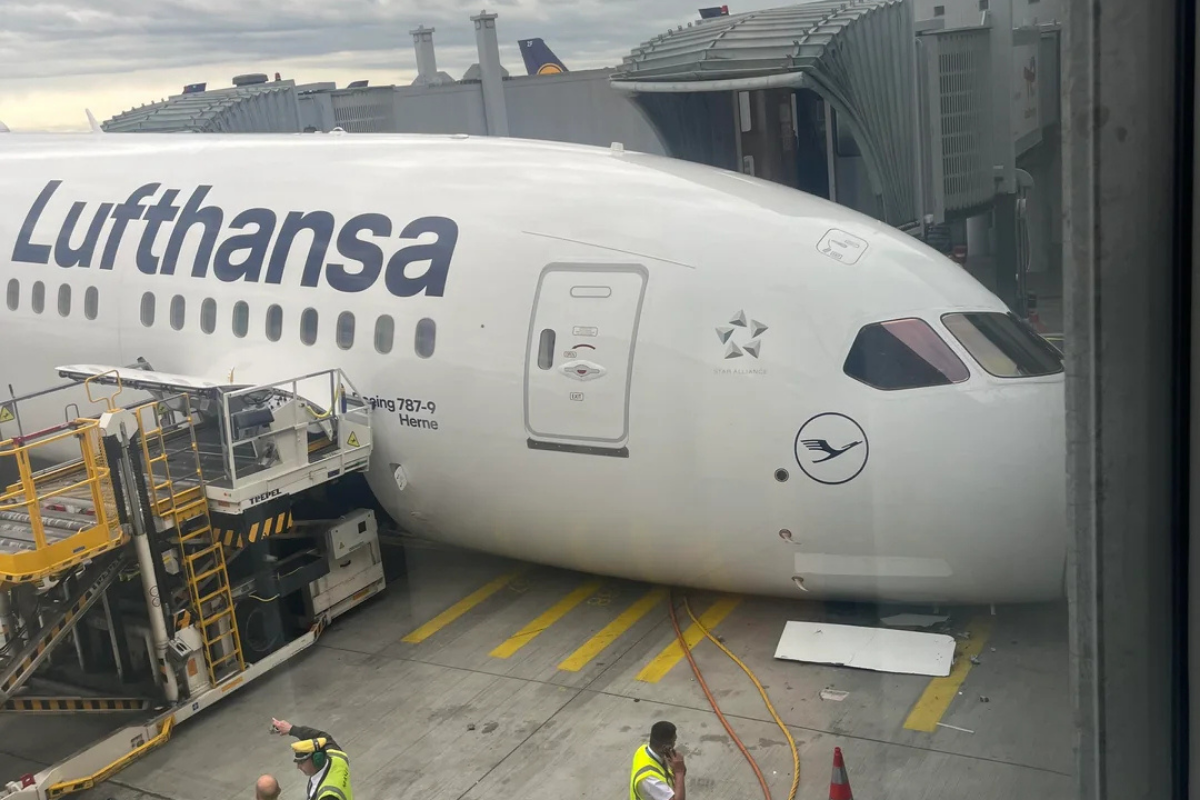
TL; DR: On June 4, 2026, a five-month-old Lufthansa Boeing 787-9 had its nose gear retract without warning at Frankfurt Airport, dropping the front of the aircraft onto the tarmac and cancelling the Los Angeles flight. A nearly identical failure happened at London Heathrow in 2021, where the AAIB confirmed a wrongly inserted safety pin caused the collapse on an aircraft that had not yet complied with an existing FAA Airworthiness Directive designed to prevent exactly that error. Whether Frankfurt shares the same cause remains for the BFU investigation to establish. Until it does, the business impact is contained, the reputational pressure on Boeing is real, and firm conclusions should wait for the evidence.
A Nearly New Boeing Aircraft, A Rare Failure
On June 4, 2026, a Lufthansa Boeing 787-9 Dreamliner, registration D-ABPQ, had its nose landing gear retract unexpectedly while the aircraft sat stationary at a gate at Frankfurt Airport. The aircraft was prepared to depart on Flight LH450 to Los Angeles. The front of the plane dropped onto the tarmac, damaging the forward fuselage and the jetbridge, and injuring several ground employees (Associated Press, 2026).
The aircraft had entered service in January 2026. Bloomberg (2026) described it as ‘almost factory-fresh,’ a detail that may carry weight once investigators begin reviewing the aircraft’s maintenance and delivery records. No passengers were on board at the time, and Lufthansa confirmed that the Los Angeles flight was cancelled and affected passengers were rebooked (Associated Press, 2026).
A Documented Precedent at London Heathrow
This Boeing 787 nose gear collapse at Frankfurt is not without precedent. On 18 June 2021, a British Airways Boeing 787-8, registration G-ZBJB, suffered an inadvertent nose landing gear retraction while parked and being loaded with cargo at London Heathrow Airport. The Air Accidents Investigation Branch (AAIB) investigated the event and published both a Special Bulletin in July 2021 and a full final report in November 2022.
The AAIB Special Bulletin (2021) established the core sequence of events. A Dispatch Deviation Guide (DDG) maintenance procedure required the cockpit landing gear selector to be cycled with hydraulic power applied to the aircraft. To prevent retraction during this process, ground crews were required to insert safety pins into the nose and main landing gear downlocks. The nose landing gear downlock pin was instead inserted into the adjacent apex pin bore, which sat close to the correct location. When the gear selector was cycled, the nose landing gear retracted, causing the aircraft to drop onto its nose and sustaining damage to the lower nose, landing gear doors, and engine cowlings (Air Accidents Investigation Branch, 2021).
The AAIB final report (2022) confirmed the cause. It also noted that an Airworthiness Directive had been issued with a 36-month compliance window from 16 January 2020, requiring an insert to be fitted over the apex pin bore specifically to prevent incorrect installation of the downlock pin. This directive had not yet been implemented on G-ZBJB at the time of the incident (Air Accidents Investigation Branch, 2022). That finding is directly relevant context for the Frankfurt investigation, even though the cause of the 2026 event has not yet been established.
Boeing 787 Safety Record: What the Regulators Found
Airworthiness Directives and the Landing Gear
The Federal Aviation Administration (FAA) has issued multiple Airworthiness Directives (ADs) affecting Boeing 787 landing gear systems over the years. An AD issued in 2019 (Federal Aviation Administration, 2019) specifically addressed the risk of the nose landing gear downlock pin being incorrectly installed in the apex pin inner bore of the nose landing gear lock link assembly, requiring remedial action across affected 787 variants. The 2022 AD (Federal Aviation Administration, 2022) reinforced this by mandating the installation of an insert over the apex pin bore across Boeing 787-8, 787-9, and 787-10 aircraft.
The FAA also proposed a further AD in August 2024, expanding an existing Boeing Service Bulletin to cover all 787 variants following a report of a nose landing gear-up landing caused by failure of the upper lock link assembly (Federal Aviation Administration, 2025). Whether the Frankfurt aircraft’s maintenance records reflect full compliance with these successive directives is one of the questions any serious investigation will need to answer.
Delivery Halts and Quality Concerns
Beyond landing gear systems, the broader 787 program has faced repeated quality-related stoppages. In May 2021, the FAA confirmed that Boeing had temporarily halted deliveries of 787 Dreamliners while the agency reviewed documentation related to inspection methods and analysis (Reuters, 2021). In February 2023, deliveries paused again after Boeing found a data analysis error related to the forward pressure bulkhead (CNBC, 2023). A further issue emerged in June 2023, when Boeing discovered a nonconforming condition related to a fitting on the horizontal stabilizer (The Seattle Times, 2023).
Each of these episodes was resolved without the FAA declaring an active safety risk to passengers in current service. The Boeing 787 Dreamliner continues to hold a strong in-service safety record across thousands of daily flights globally. These delivery stoppages are manufacturing and quality-control concerns, and they are worth noting as background context. They say something about the organisational pressures Boeing has operated under, but they do not predict the cause of the Frankfurt Boeing 787 nose gear collapse.
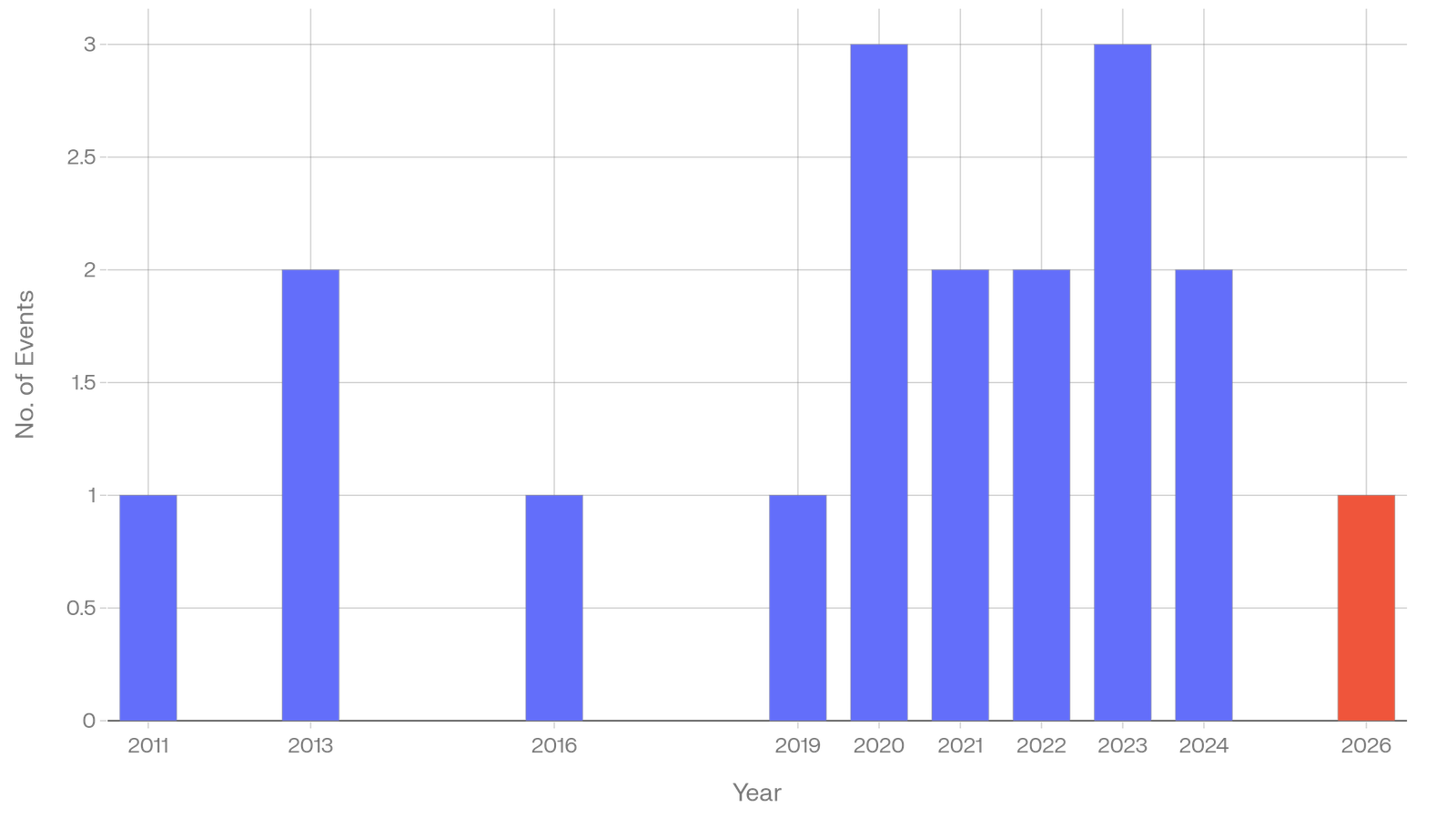
Compiled from: AAIB (2021, 2022); FAA Federal Register (2022, 2025); Reuters (2021); The Seattle Times (2023).
Immediate Implications for Lufthansa
For Lufthansa, the operational and financial consequences are immediate and concrete. Flight LH450 was cancelled, the aircraft faces an extended grounding while structural damage is assessed, and the airline is managing employee injuries and regulatory reporting obligations (Associated Press, 2026). The incident also places Lufthansa’s maintenance procedures under scrutiny.
If the investigation finds that the Frankfurt Boeing 787 nose gear collapse resulted from a procedural or maintenance error during pre-flight preparations, the focus will fall on the airline’s maintenance training, checklist adherence, and supervision. If the cause points to a mechanical or design failure, the attention moves to Boeing and potentially to a fleet-wide response. Either outcome carries reputational and financial consequences for one or both parties. At this early stage, assigning responsibility in either direction would be premature.
The Boeing Dimension
Reputation and Market Sensitivity
Boeing carries an elevated sensitivity to safety news that developed through the 737 MAX accidents of 2018 and 2019, and the subsequent grounding of that fleet. The company has since faced sustained regulatory scrutiny, production quality challenges, and a series of public incidents that have kept it in the news for reasons unrelated to commercial performance. A Boeing 787 nose gear collapse at Frankfurt, captured on video and circulating within hours, arrives in that context.
That context does not determine how the market or regulators will respond. If the investigation attributes the cause to a one-time maintenance error with no systemic implications, the incident will likely not alter Boeing’s delivery timelines or regulatory standing in any lasting way. If, on the other hand, investigators find a link to the design vulnerability identified in the 2021 Heathrow case and documented in successive FAA Airworthiness Directives (Federal Aviation Administration, 2019; 2022), the conversation around 787 airworthiness could reopen at a programme-wide level.
Delivery Pipeline and Airline Confidence
Boeing has worked to rebuild its 787 delivery rate following multiple production pauses. Any renewed regulatory attention on the type carries a risk of disrupting that momentum. Airlines holding 787 orders or operating existing fleets will monitor the investigation findings carefully, even without making public statements. The outcome of this investigation matters beyond the single aircraft involved.
Reading the Risk: Normal Accident Theory
Sociologist Charles Perrow developed Normal Accident Theory to explain why accidents occur in complex, tightly coupled systems even when individual components function correctly and operators follow procedures. Perrow (1984) argued that in such systems, small failures can interact in unexpected ways that no single designer or operator anticipated. Commercial aviation is among the clearest examples of such a system.
Applied to the Frankfurt Boeing 787 nose gear collapse, Perrow’s framework suggests that investigators will serve the public interest better by examining the full system rather than focusing narrowly on the last person who touched the aircraft. That includes the design of the landing gear assembly and its adjacent pin holes, the training protocols for DDG maintenance procedures, the status of Airworthiness Directive compliance across the fleet, and the timeline of the aircraft’s delivery and commissioning. The AAIB’s 2021 Special Bulletin demonstrated this approach, tracing the Heathrow incident back through design, maintenance procedure, and oversight layers rather than stopping at the immediate human error (Air Accidents Investigation Branch, 2021).
What the Investigation Will Likely Examine
The German Federal Bureau of Aircraft Accident Investigation (Bundesstelle fuer Flugunfalluntersuchung, BFU) holds lead jurisdiction for the Frankfurt Boeing 787 nose gear collapse investigation. Given that the aircraft type is manufactured in the United States, the National Transportation Safety Board (NTSB) and FAA will participate as state of design and manufacture representatives, consistent with ICAO Annex 13 procedures. The investigation will examine maintenance records, cockpit voice recorder data if relevant, component history, and Airworthiness Directive compliance logs.
The early indicator to watch is whether any authority issues interim operational guidance to other 787 operators before the full investigation concludes. Such guidance, if it came, would signal that investigators had found or suspected a systemic issue rather than an isolated incident. Absent that, the investigation will run its course over months, and final conclusions should be awaited before drawing firm judgements.
References
Air Accidents Investigation Branch (2021) AAIB Special Bulletin S1/2021: Boeing 787-8, G-ZBJB, inadvertent nose landing gear retraction during pre-flight maintenance, London Heathrow Airport, 18 June 2021. Farnborough: AAIB. Available at: https://www.gov.uk/aaib-reports/aaib-special-bulletin-s1-slash-2021-on-boeing-787-8-g-zbjb (Accessed: 4 June 2026).
Air Accidents Investigation Branch (2022) Report on the serious incident to Boeing 787-8, G-ZBJB, inadvertent nose landing gear retraction whilst parked on stand, London Heathrow Airport, 18 June 2021. Farnborough: AAIB. Available at: https://www.gov.uk/government/news/aaib-report-boeing-787-8-inadvertent-nose-landing-gear-retraction-whilst-parked-on-stand-london-heathrow-airport-18-june-2021 (Accessed: 4 June 2026).
Associated Press (2026) ‘Lufthansa employees injured in a Boeing nose gear incident at Frankfurt Airport’, 4 June. Available at: https://apnews.com/article/lufthansa-frankfurt-los-angeles-boeing-dreamliner-a6e050acf74b811a697840e432c7c47c (Accessed: 4 June 2026).
Bloomberg (2026) ‘Lufthansa 787 parked at Frankfurt gate sees front wheel collapse’, 4 June. Available at: https://www.bloomberg.com/news/articles/2026-06-04/lufthansa-787-parked-at-frankfurt-gate-sees-front-wheel-collapse (Accessed: 4 June 2026).
CNBC (2023) ‘Boeing temporarily halts delivery of 787 Dreamliners over fuselage issue’, 23 February. Available at: https://www.cnbc.com/2023/02/23/boeing-temporarily-halts-delivery-of-787-dreamliners-over-fuselage-issue.html (Accessed: 4 June 2026).
Federal Aviation Administration (2019) Airworthiness Directives; The Boeing Company Airplanes. Federal Register, 84(141), pp. 35519-35522. Available at: https://www.federalregister.gov/documents/2019/07/23/2019-15519/airworthiness-directives-the-boeing-company-airplanes (Accessed: 4 June 2026).
Federal Aviation Administration (2022) Airworthiness Directives; The Boeing Company Airplanes. Federal Register, 87(36). Available at: https://www.federalregister.gov/documents/2022/02/23/2022-03772/airworthiness-directives-the-boeing-company-airplanes (Accessed: 4 June 2026).
Federal Aviation Administration (2025) Airworthiness Directives; The Boeing Company Airplanes. Federal Register, 90(60). Available at: https://www.transportation.gov/regulations/federal-register-documents/2025-21478 (Accessed: 4 June 2026).
The Seattle Times (2023) ‘Boeing finds another quality problem on 787, delaying deliveries again’, 6 June. Available at: https://www.seattletimes.com/business/boeing-aerospace/boeing-discovers-another-quality-flaw-on-787-delaying-deliveries-again/ (Accessed: 4 June 2026).
Author’s Note: This article was written on 4 June 2026 based on initial reporting and available official sources. The BFU investigation is ongoing. Conclusions about causation should be treated as provisional until official investigation findings are published.
This article focuses specifically on the Frankfurt nose gear collapse of June 4, 2026, and its regulatory precedent at London Heathrow in 2021. It does not attempt a comprehensive audit of the Boeing 787’s full safety history. Notable events including the 2013 global fleet grounding over battery fires, the 2024 Latam mid-air altitude excursion, and the 2025 Air India Flight 171 fatal crash at Ahmedabad fall outside the immediate scope of this analysis but carry independent significance. Each warrants separate, dedicated examination. The chart in Figure 1 reflects selected quality and safety events relevant to the article’s argument and should not be read as a complete incident record for the Boeing 787 programme.